
If you’re reading this, something about your teenager has shifted. Maybe they’ve gone quieter lately, coming home from school and heading straight to their room. Maybe they seem less sure of themselves than they used to be, or they’re telling you they don’t know what they want, don’t see the point, or feel like everyone else has it figured out except them. As a parent, that’s hard to watch. You want to help, but you’re not always sure what kind of help they need or what they’d actually accept from you.
That’s where coaching comes in. As a life coach in Birmingham, I’ve been working with young people aged 13–19 for over a decade, as a teen life coach in Birmingham, I offer a space that isn’t school, isn’t home, and isn’t therapy. A one-to-one relationship focused entirely on helping your teenager think more clearly, feel more confident, and make choices they actually believe in.
If you’d like to understand what that looks like in practice before involving your teenager, you’re in the right place. Read on, and if you have questions, I’m always happy to talk.
What Is Teen Life Coaching?
Teen life coaching is a structured, one-to-one relationship between a trained coach and a young person, focused on helping them move forward in areas of their life where they feel stuck, uncertain, or held back.
It is not therapy. It is not tutoring. It does not diagnose or treat mental health conditions. If you’d like to understand more about what life coaching is and how it differs from other forms of support, I’ve written about that in more depth elsewhere.
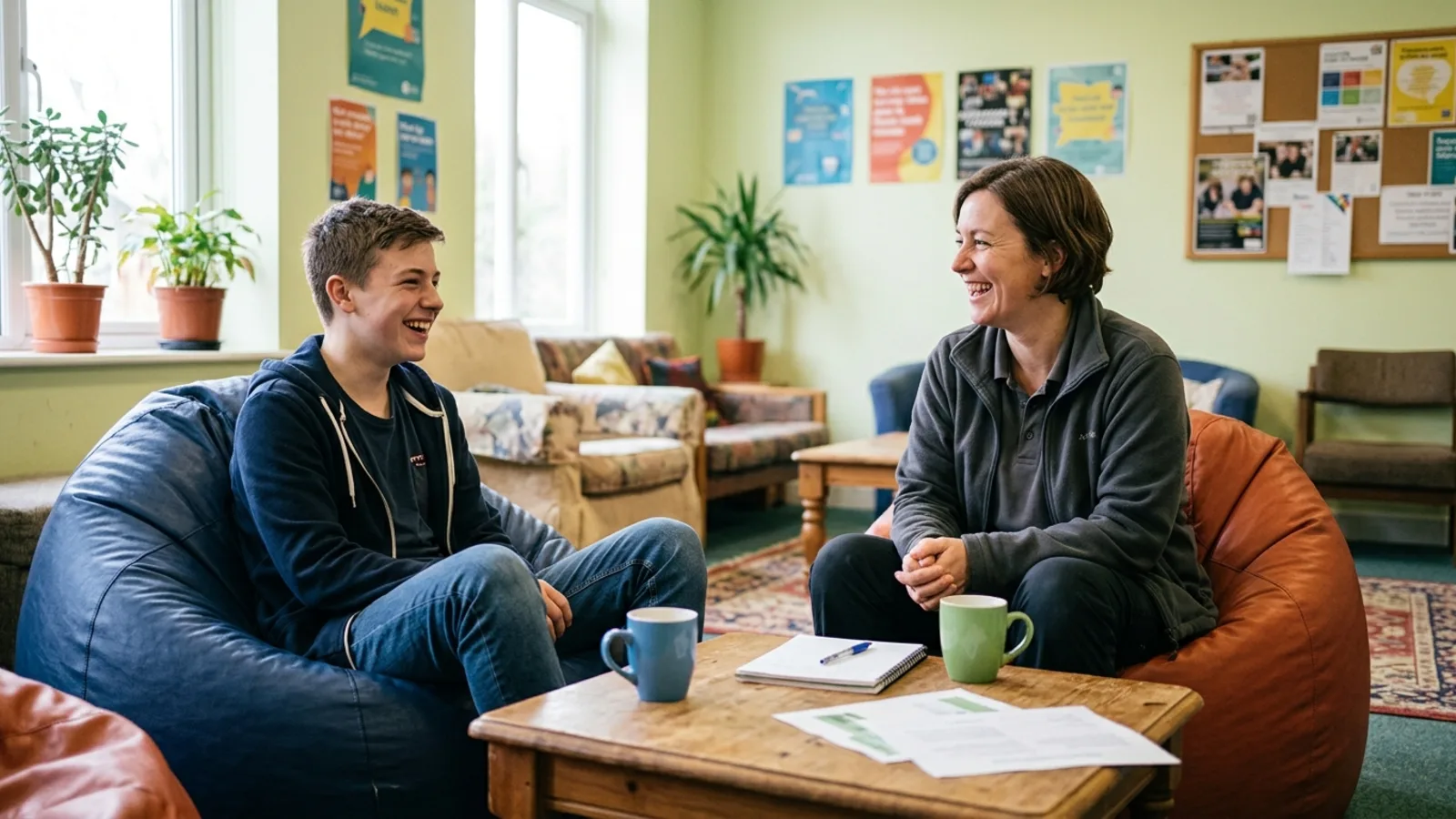
What coaching does is create a space (entirely the teenager’s own) where they can think out loud without being judged, advised, or managed. Unlike talking to a teacher (who has a role and responsibilities within a school system) or talking to a parent (who loves them, but is also affected by the outcome), a coach has no agenda other than helping the young person find their own answers.
Coaching is forward-focused and strength-based. We don’t spend our sessions analysing what went wrong in the past. We look at where the young person wants to get to, what’s getting in the way, and what they’re capable of that they might not yet be giving themselves credit for.
Sessions are confidential. What your teenager tells me stays between us, within standard safeguarding boundaries, which I’ll explain clearly to both of you before we begin. I am DBS checked, and safeguarding is built into how I work, not an afterthought.
Signs Your Teenager Might Benefit from Coaching
Parents often come to me when they’ve noticed one or more of the following:
- Their teenager seems anxious about exams, coursework, or school performance, particularly around GCSEs or A-levels
- They lack confidence in social situations, or have started to avoid situations they used to manage comfortably
- They’re approaching the end of school and have no idea what they want to do next
- They’re going through a school transition (starting secondary school, moving into sixth form, or considering leaving full-time education) and finding it harder than expected
- They seem withdrawn, unmotivated, or disengaged from things they used to care about
- They’re struggling with friendships, peer pressure, or feeling like they don’t fit in
- They have big goals or ambitions but don’t know how to pursue them or don’t feel like they’re allowed to
- They say “I don’t know what I want” more often than feels comfortable and seem genuinely unsettled by not knowing
None of these things mean something is wrong with your teenager. They mean they’re a young person navigating a genuinely difficult time of life without a clear roadmap. Coaching helps them build one.
How Teen Coaching Works in Practice
Every coaching relationship starts with a conversation with you, as the parent. Before I meet your teenager, I offer a free discovery call so that you can ask whatever questions you need to ask. What will sessions look like? What will I be working on with your child? How does safeguarding work? What will you hear back from me? I want you to feel informed and confident before we go any further.
After that initial parent call, I arrange a separate introductory session with your teenager. This is where we meet, talk about how coaching works, and see whether there’s a natural connection. Coaching only works if the young person wants to be there. I will never pressure a reluctant teenager, and I’ll be honest with you if I don’t think the fit is right at this point.
If we move forward, sessions are 45 to 60 minutes long and typically take place fortnightly. I offer sessions in person in Birmingham, online via video call, or by phone: whatever makes the sessions most accessible for your teenager.
Crucially: the teenager sets the agenda. Coaching follows their goals, not yours. This might feel uncomfortable if you have particular things you’d like addressed, but it’s actually what makes coaching effective. Young people engage when they feel ownership over the process. When coaching is imposed on them with someone else’s agenda, they disengage.
Most young people I work with have between 6 and 12 sessions over a school term or two. That said, I tailor the length of our work to what the individual needs: some young people find clarity faster, others want more time.
Parents receive brief updates on progress (not the content of sessions, but a general sense of how things are going) unless a safeguarding concern requires me to act differently. I’ll always explain those boundaries clearly upfront.
You can find more information about what sessions cover on my teen life coaching programme page.
Key Areas I Work On with Teenagers
Confidence and self-belief
Many teenagers I work with are perfectly capable, they just don’t believe it yet. Confidence isn’t something you either have or don’t have; it’s something that develops through understanding yourself better and choosing to act despite uncertainty. In coaching, we work on quieting the inner critic, recognising distorted thinking patterns, and building a more accurate and stable sense of self-worth, the kind that holds up under peer pressure and doesn’t collapse when something goes wrong.
Exam stress and academic pressure
This is one of the most common reasons parents contact me, particularly as GCSEs and A-levels approach. I want to be clear: coaching isn’t revision technique. What coaching can do is help your teenager manage anxiety, gain perspective on what exams actually mean (and don’t mean), and develop a performance mindset that allows them to do justice to the work they’ve already put in. Many young people who struggle in exams are not underprepared. They’re overwhelmed. That’s a different problem, and it has a different solution.
School transitions
The move from primary to secondary school, from Year 11 into sixth form, or from school into whatever comes next: these transitions are significant. They involve a loss of familiarity, changes in social group, new expectations, and often a period of genuine uncertainty about identity. Coaching helps teenagers navigate that uncertainty with more confidence and less chaos. We work on what they’re carrying into the next chapter and how they want to show up.
Direction and purpose
“I don’t know what I want” is one of the most common things I hear from teenagers, and also one of the most important. Young people are under enormous pressure to have a plan (from school, from family, from university and careers advisers), but genuine clarity about what you want takes time and self-knowledge to develop. In coaching, we work on identity, values, and the kind of life the young person actually wants to build. The goal isn’t to produce a career plan; it’s to help them feel like the author of their own choices.
How Is Teen Coaching Different from Therapy?
I think it’s important to be direct about this, because parents sometimes wonder whether coaching or therapy is the right call.
Therapy treats. It is the appropriate support for young people dealing with diagnosed mental health conditions, trauma, eating disorders, clinical anxiety, depression, or other issues that require clinical intervention. If your teenager is struggling at that level, please speak to your GP or contact CAMHS first. Coaching is not a substitute for clinical support, and I will always be honest with you if I think coaching isn’t the right fit.
Coaching develops. It is for young people who are fundamentally okay but want to grow: to become more confident, clearer about their direction, better at managing pressure. The distinction matters, and I take it seriously.
Coaching and therapy can also work alongside each other. Some of the young people I work with are also seeing a therapist or counsellor. The two forms of support address different things and don’t conflict. In fact, they often reinforce each other. If your teenager is already receiving therapeutic support and you’d like to explore coaching as well, we can talk about whether that makes sense.
Teen Coaching and Birmingham Schools
Alongside my individual work with young people, I also work with schools across Birmingham and the West Midlands through structured school coaching programmes. These are designed for schools that want to embed coaching into their pastoral provision, offering students a dedicated, confidential space for development as part of their school experience.
For parents whose teenagers have already encountered coaching through school and want to continue that work on an individual basis, private coaching sessions are a natural next step. The relationship and the approach are familiar; the focus simply shifts to what matters most to your teenager right now.
For schools interested in what coaching could offer their students, I am experienced working within school environments and understand both the pastoral and safeguarding frameworks schools operate within.
Frequently Asked Questions
How is coaching different from counselling for my teenager?
Counselling (and therapy) is designed to help people process difficult experiences, manage mental health conditions, and address emotional wounds from the past. It is typically led by a qualified clinical practitioner and focuses on understanding and healing. Coaching is future-focused: it assumes the young person is capable and resourced, and works with them to move toward the life they want. A counsellor might help a teenager understand why they feel anxious; a coach works with the teenager on what they want to do differently going forward. Both have value. They’re just doing different things.
My teenager is reluctant: will coaching still work?
Reluctance is common, and I never try to push a young person into coaching they don’t want. What I find, though, is that many teenagers who say they’re reluctant are actually just cautious about something unfamiliar, particularly anything that sounds like being analysed or told what to do. The introductory session I offer is specifically designed to address that: it’s a low-pressure conversation where the teenager gets to find out what coaching actually involves before committing to anything. Some young people come in sceptical and leave genuinely curious. Others aren’t ready yet, and that’s okay too. Readiness matters.
How much does teen life coaching cost in Birmingham?
I provide current pricing on request, as my availability and packages can vary. You can read more about how much teen coaching costs in the UK generally, and then contact me directly for specific figures. I always have that conversation during the parent discovery call so there are no surprises.
At what age can teenagers start coaching?
I work with young people aged 13 to 19. The lower end of that range (13–14) benefits from parental involvement in the process. I’ll always meet with you first and keep you appropriately informed. For older teenagers (particularly those in sixth form or preparing to leave school), the work becomes progressively more young-adult in tone, reflecting their increasing independence. I adapt my approach to the individual, not just their age.
Ready to Find Out More?
If something in this post has resonated with you, I’d love to talk. The first step is a free consultation for parents (just you, no teenager required yet). It’s a chance to ask whatever questions you have, tell me a little about your situation, and find out whether coaching might be a good fit.
You can book your free consultation, call me on 07505 784546, or email info@ovpcoaching.co.uk. I aim to respond to all enquiries within 24 hours.
I’ve been working as a certified life coach for over a decade, trained through the John Maxwell Team, and I’ve had the privilege of supporting young people through some of the most uncertain and formative years of their lives. I’ve been featured in IE Today Magazine and on Connections Radio and The Sylbourne TV show, but what matters most to me is the work I do with the young people and families I support, one session at a time.
If your teenager is struggling to find their footing, I’m here.